
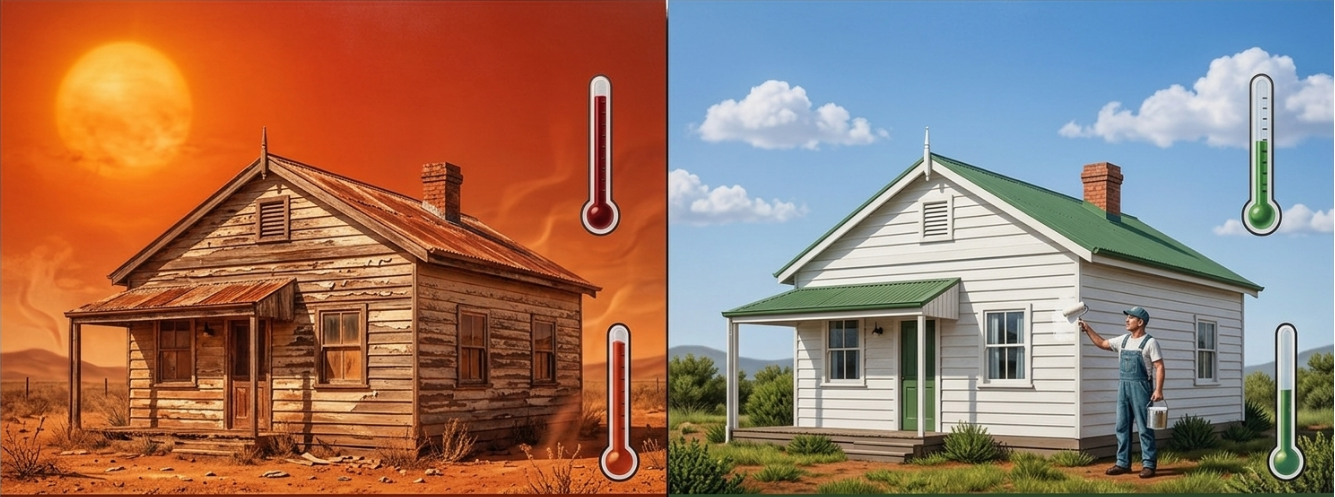
Paint is a science as much as it is a trade. Every coating has a window — a range of temperature, humidity, and UV conditions where it bonds correctly, cures fully, and achieves the lifespan it was designed for. In most Australian cities, that window is wide. In Kalgoorlie, it narrows considerably. Understanding how the Goldfields climate affects your paint job — and when to time exterior and interior work — is the difference between a result that holds for a decade and one that starts peeling within two years.
Why Kalgoorlie’s Climate Changes Everything
The Goldfields sits in a semi-arid zone with some of the most extreme temperature swings in Western Australia. Summers regularly push past 40°C, often with low humidity and fierce UV radiation — conditions that cause paint to skin over and dry on the surface before it has properly bonded to the substrate below. Winters are mild by day but drop sharply at night, and while rainfall is low, the rare downpours that do arrive can be sudden and intense.
This environment creates two distinct painting challenges. For exterior surfaces, the heat and UV are the main threats — they accelerate film failure, chalk the surface coating, and bleach colour faster than the manufacturer’s ratings predict. For interior surfaces, the dry air and temperature extremes cause timber, plaster, and other substrates to expand and contract year-round, stressing the paint film at joints and edges.
A professional painter who knows the Goldfields accounts for all of this before a single brush stroke is applied.
The Goldfields Painting Calendar
Here’s how the seasons break down for painting work in and around Kalgoorlie:
- Autumn (March – May): Best for exteriors. Temperatures drop to 18–28°C with lower UV, creating ideal curing conditions and low humidity.
- Winter (June – August): Good for interiors. The weather is cool and stable, making it ideal for interior repaints, though there is an exterior dew risk in the early mornings.
- Spring (September – October): Best for exteriors. Characterized by warming temperatures, low humidity, and consistent drying. It is recommended to book early as demand is high.
- Summer (November – February): Avoid exteriors. Hot days of 40°C+ cause paint blistering and poor adhesion; interior work should only be done with A/C.
Exterior Painting: Why Autumn and Spring Win
For any exterior surface — weatherboard, rendered brick, Colorbond fencing, timber decks, or concrete — the sweet spot in Kalgoorlie is between 10°C and 32°C, with no rain forecast for at least 24 hours after application. That window exists most reliably in autumn (March to May) and spring (September to October).
Why summer exterior painting fails
When air temperatures exceed 35°C, solvent-based paints lose their solvents too quickly, leaving a brittle film that hasn’t properly bonded. Water-based paints — which are now the industry standard for most exterior applications — face a different problem: the water in the formulation evaporates too fast, preventing the paint from flowing and levelling before it skins over. The result is a dry, uneven surface with poor adhesion that looks rough and ages quickly.
UV radiation compounds this. Direct midday sun in a Kalgoorlie summer can heat dark-coloured surfaces to 60°C or above. Even freshly applied, quality paint is not designed to cure under those conditions.
Watch out
Never paint exterior surfaces in direct sunlight when temperatures are above 35°C. The Goldfields summer sun will cause blistering, poor adhesion, and an uneven finish that no amount of second-coating will fix. Work early morning if summer painting is unavoidable — and use a paint system rated for high-temperature conditions.
The wind and dust factor
Kalgoorlie’s famous red dust doesn’t just settle on windowsills. During dry, windy conditions, it becomes airborne and lands on freshly applied paint before it has cured, embedding into the film and creating a rough, contaminated surface. Autumn and spring conditions are generally calmer, but any exterior painting project should account for wind direction and avoid application during dust events.
Interior Painting: Possible Year-Round, but Best in Winter
Interior painting has more flexibility because the indoor environment is controlled — you’re not fighting direct sun, rain, or wind. That said, a few seasonal factors still apply.
Winter is ideal for interior repaints
Kalgoorlie winters are mild during the day (averaging 17–18°C) and cool at night. This means lower ambient temperatures, which slow drying slightly — and that’s actually a good thing for interior paint. Slower drying allows the paint film to flow and level properly, producing a smoother finish with fewer brush marks and lap lines. For high-gloss finishes on trims, doors, and cabinetry, winter conditions in the Goldfields are genuinely excellent.
Summer interiors: ventilation is everything
Interior painting in Goldfields summers is viable if the space has air conditioning running during application. Without it, ambient temperatures above 35°C create the same fast-skinning problems indoors that exterior painters face outside. Adequate ventilation also matters: VOC build-up in a hot, enclosed space is both a health risk and a quality risk, as solvent vapour interferes with proper film formation in some paint systems.
Pro tip
Ventilate during and after any interior painting job — open windows and run fans across the room, not blowing directly at the painted surface. Air movement helps the paint cure evenly. In summer, keep the A/C running at a moderate temperature (around 22–24°C) rather than ice-cold, which can cause condensation issues on walls.
Interior vs Exterior: Key Differences in the Kalgoorlie Context
Interior painting
- Can be done any season with climate control
- Best results in mild, stable temperatures (15–25°C)
- Low humidity helps water-based paints cure cleanly
- Ventilation is critical — especially in summer
- Winter is peak season for trims and high-gloss finishes
- Substrate movement (plaster, timber) is lower in cooler months
Exterior painting
- Season-dependent — avoid summer above 35°C
- Autumn and spring are the prime windows
- UV-rated coatings essential year-round in the Goldfields
- Surface must be dust-free and dry before application
- No painting within 24 hours of forecast rain
- Morning start times reduce heat exposure during application
How Surface Preparation Changes With the Season
Timing doesn’t just affect paint application — it affects surface preparation too. And in the Goldfields, prep is arguably more important than the topcoat itself.
Hot and dry conditions (summer)
In summer, timber and plasterboard can become extremely dry, absorbing primer faster than normal and leaving porous areas that need additional coats to achieve the specified coverage. Sanding in dry conditions also generates more airborne dust, which must be thoroughly removed before painting. If you’re doing any gap-filling or caulking in summer, choose products rated for high thermal movement — standard acrylic caulk can crack when the substrate expands and contracts rapidly.
Cooler conditions (autumn, winter, spring)
Cooler conditions reduce the urgency around surface cleaning but introduce their own challenges. Early morning dew in Kalgoorlie’s winter months can leave moisture on exterior surfaces that isn’t visible to the eye. A professional painter will check surface moisture with a meter before starting, not just rely on visual inspection. Painting over even slightly damp surfaces is one of the most common causes of adhesion failure in exterior jobs done during the cooler months.
Prep in the right conditions and the paint looks after itself. Rush it in the wrong season and no premium product will save the finish.
— Goldfields Painters
Planning Your Project: Practical Timing Advice
If you’re thinking about a residential repaint, a commercial refresh, or any exterior maintenance painting across Kalgoorlie or Boulder, here’s how to approach the timing:
- Book autumn and spring slots early. These are the peak seasons for exterior painting across the Goldfields and professional painters’ calendars fill up quickly from August onwards. Waiting until October to book a spring job often means waiting until March.
- Interior jobs can move faster. If your project is primarily interior — walls, ceilings, trims — you have more flexibility and can often schedule within a few weeks year-round.
- Don’t let the deadline drive the season. A renovation timeline or a property sale shouldn’t push an exterior paint job into a 42°C February week. The paint won’t perform and you’ll be repainting sooner than you planned.
- Discuss timing with your painter before booking. A professional who knows the local conditions will advise you on the right window and flag any risks. That conversation is free.
Good to know
Some premium exterior paint systems are formulated for extended application temperature ranges — down to 8°C and up to 38°C. These products cost more but give professional painters more scheduling flexibility in marginal conditions. Always ask what system is being used and whether it's suited to the season you're painting in.
Frequently Asked Questions
What is the best time of year to paint a house exterior in Kalgoorlie?
Autumn (March to May) and spring (September to October) are the most reliable windows. Temperatures are moderate, humidity is low, and UV intensity is reduced compared to peak summer. Autumn is slightly preferred because surfaces have had time to dry out after any summer weathering.
Can you paint exterior surfaces in Kalgoorlie summer?
It’s possible but risky above 35°C. Paint dries too quickly, adhesion suffers, and the finish can blister or crack. If summer painting is unavoidable, schedule work for early morning, choose a product rated for high-temperature application, and avoid dark-coloured surfaces in direct sun.
Is interior painting okay all year round in Kalgoorlie?
Generally yes, provided temperatures are controlled indoors. Air conditioning and adequate ventilation make summer interior painting workable. Winter is actually ideal for trims and high-gloss finishes — cooler, stable temperatures give the paint more time to flow and level before it cures.
How long should I wait after rain before exterior painting?
At minimum 24 hours after rain, but in practice a professional will test surface moisture before starting. Painted surfaces need to be completely dry — not just visually dry. Timber can hold moisture for 48–72 hours after rainfall, even in warm conditions.
Does colour choice affect how paint performs in the Goldfields heat?
Yes. Darker colours absorb significantly more heat than lighter ones — a dark exterior surface can reach 60°C+ in a Kalgoorlie summer, which puts serious stress on the paint film. Light to mid-tone colours perform better on exterior surfaces in high-UV environments. Some premium paint systems include heat-reflective pigments that help dark colours perform more reliably.
Goldfields Painters is Kalgoorlie’s locally based, Master Painters Australia-registered painting contractor. With over 25 years of industry experience and more than eight years working across Kalgoorlie, Boulder, and the wider Goldfields, the team plans every job around local conditions — from substrate preparation through to the right paint system for the season. Residential, commercial, and industrial painting services, all at a fixed quoted price.