
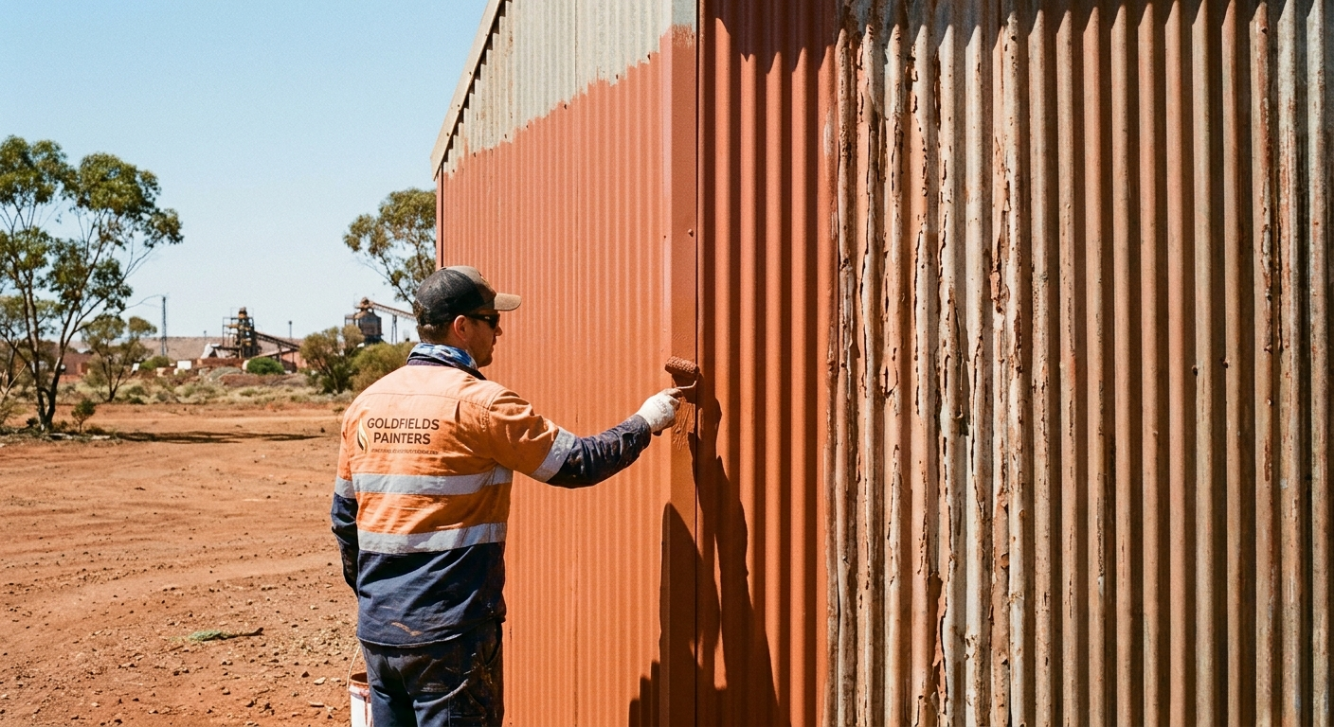
Most people think about painting when their home starts looking tired — the colour’s faded, the walls feel dated, or they’re gearing up to sell. That’s fair enough. But in the Goldfields, there’s a stronger case for painting your property that goes well beyond appearances. Here, paint is one of the most cost-effective forms of protection your building has.
Whether you own a home in Kalgoorlie–Boulder, a commercial property on Hannan Street, or an industrial facility out in the region, understanding what paint actually does — and what happens when it fails — can save you thousands in premature repairs.
The Goldfields Environment Is Harder on Buildings Than Most People Realise
Kalgoorlie’s climate is unforgiving. Summers regularly push past 40°C, UV radiation is intense year-round, and red dust works its way into every crack and crevice. Winters bring cold nights, occasional frost, and temperature swings that cause materials to expand and contract repeatedly.
All of this puts your building’s exterior surfaces under constant stress. Timber dries and splits. Render cracks. Steel corrodes. Concrete absorbs moisture and carbonates over time. Paint is the first line of defence against all of it — but only when it’s applied correctly and maintained properly.
A failing paint job isn’t just an eyesore. It’s an open door for moisture, UV damage, and oxidisation to work their way into your building’s structure.
What Paint Actually Does to a Building
A quality exterior paint system does several things at once:
- Moisture barrier. Properly applied paint seals surfaces against water ingress. In the Goldfields, this matters even in a dry climate — summer storms can be intense, and morning dew combined with red dust creates a surprisingly corrosive paste on exposed surfaces.
- UV protection. The sun bleaches, dries, and degrades almost every building material. Quality exterior paints contain UV-blocking pigments and resins that slow this process significantly. Cheap paints or thin applications offer much weaker protection and chalk and fade quickly.
- Thermal regulation. Light-coloured exterior paints reflect more radiant heat, reducing surface temperatures and the expansion stress on the building fabric beneath. In a Kalgoorlie summer, this is more than a comfort benefit — it reduces structural wear.
- Corrosion resistance. For steel elements — fences, roofing, structural members, industrial equipment — the right paint system prevents rust from taking hold. Once corrosion starts beneath a paint film, it spreads fast and is expensive to arrest.
- Surface consolidation. On older masonry and render, a quality paint system can bind and stabilise the substrate, preventing further deterioration.
Why Surface Preparation Is the Most Important Part of the Job
Here’s something that separates a professional paint job from a DIY one: most of the work happens before a drop of paint goes on.
Poor preparation is the number one reason paint fails early. If surfaces aren’t cleaned, sanded, filled, primed, and properly dried before painting, even the best paint in the world won’t adhere correctly. It’ll peel, crack, or bubble within a year or two — leaving you worse off than before.
In the Goldfields, preparation has to account for specific local conditions:
- Red dust and mineral deposits need to be thoroughly washed off before any coating is applied. Dust acts as a release agent under paint film.
- Chalking from previous paint jobs has to be scrubbed back or primed over correctly, or new coats won’t bond.
- Timber swelling and checking from heat cycles needs to be sanded back and filled before repainting.
- Rust on steel must be treated with the right rust converter or primer, not just painted over.
Taking shortcuts on prep might look fine for six months. But it will fail — and often in ways that are harder and more expensive to fix than if the job had been done right the first time.
Residential, Commercial, and Industrial — Different Surfaces, Different Demands
Not all painting jobs are the same, and the products and methods that work on a suburban home aren’t necessarily right for a commercial shopfront or a mining workshop.
- Residential painting is about longevity and liveability. The right exterior system needs to handle Goldfields UV and heat cycles while keeping interiors comfortable. Interior work is about finish quality, low-VOC products for health, and colours that hold true over time.
- Commercial painting adds the dimension of business operations. Minimising disruption, working around trading hours, maintaining clean and professional presentation throughout — these matter as much as the finish itself.
- Industrial painting is a different discipline again. Anti-corrosion coatings, chemical resistance, line marking, protective floor coatings — the specifications are tighter and the stakes higher. Getting the wrong product on a workshop floor or an industrial shed can mean costly failure and potential safety issues.
- Line marking for car parks, warehouses, and commercial facilities requires specific traffic-grade paints applied to precise tolerances. It’s a technical job that needs the right equipment and materials, not a paint roller and some leftover house paint.
The Real Cost of Delaying Maintenance
One of the most common mistakes property owners make is putting off repainting because it feels like an optional expense. In reality, delaying maintenance almost always costs more in the long run.
Here’s why. When paint film deteriorates, moisture and UV begin attacking the substrate directly. Timber rots. Steel rusts. Render deteriorates. By the time you get around to repainting, you’re not just paying for paint — you’re paying for timber replacement, rust treatment, render repairs, and the extra labour to bring everything back to a paintable condition.
Repainting a well-maintained surface costs a fraction of repainting a neglected one. A simple maintenance cycle — repainting exterior surfaces every seven to ten years in the Goldfields climate, or sooner if you notice chalking, peeling, or cracking — protects your asset and keeps costs predictable.
What to Look for in a Painting Contractor in the Goldfields
If you’re investing in a professional paint job, it’s worth making sure you’re getting one. A few things to look for:
- Registration with Master Painters Australia. This is the industry benchmark. Registered painters carry appropriate insurance, work to Australian standards, and are accountable to a professional body. It’s not just a badge — it’s a meaningful indicator of professionalism.
- Local experience. The Goldfields climate is specific. A painter who’s worked in Kalgoorlie and Boulder for years will understand the prep requirements, the right products for local conditions, and the common failure points in regional buildings. That knowledge is worth something.
- Proper quoting. A reputable painter will inspect the job before quoting, identify any prep work required, and give you a written price. Be wary of quotes given over the phone without a site visit — they almost always lead to variations later.
- Clear communication. Good tradespeople communicate clearly from the start. You should know the scope of work, the timeline, the products being used, and what to expect throughout the job.
Ready to Protect Your Property?
At Goldfields Painters, we’ve been working across Kalgoorlie, Boulder, and the wider Goldfields for over 25 years. We’re registered with Master Painters Australia, we use premium Australian-standard paints, and we take surface preparation seriously — because that’s where a lasting result is built.
Whether you need a residential repaint, a commercial fit-out, industrial coatings, or line marking, we’ll give you a straight quote and do the job properly.
Call us on 0417 963 773 or visit goldfieldspainters.com to request a free quote.
Goldfields Painters — Kalgoorlie, WA. Residential, commercial, and industrial painting specialists.